Retaining walls play a foundational role in modern landscaping construction.
At their core, retaining walls are built to hold soil in place. They help prevent erosion, manage water flow, and stabilize land that would otherwise shift or wash away over time. When thoughtfully planned, retaining walls also serve as a defining landscaping feature that shapes outdoor living areas, garden beds, and walkways.
In this guide, we explore how retaining walls work, when they are needed, and how they enhance the overall appearance of homes and businesses.
Understanding Soil Erosion
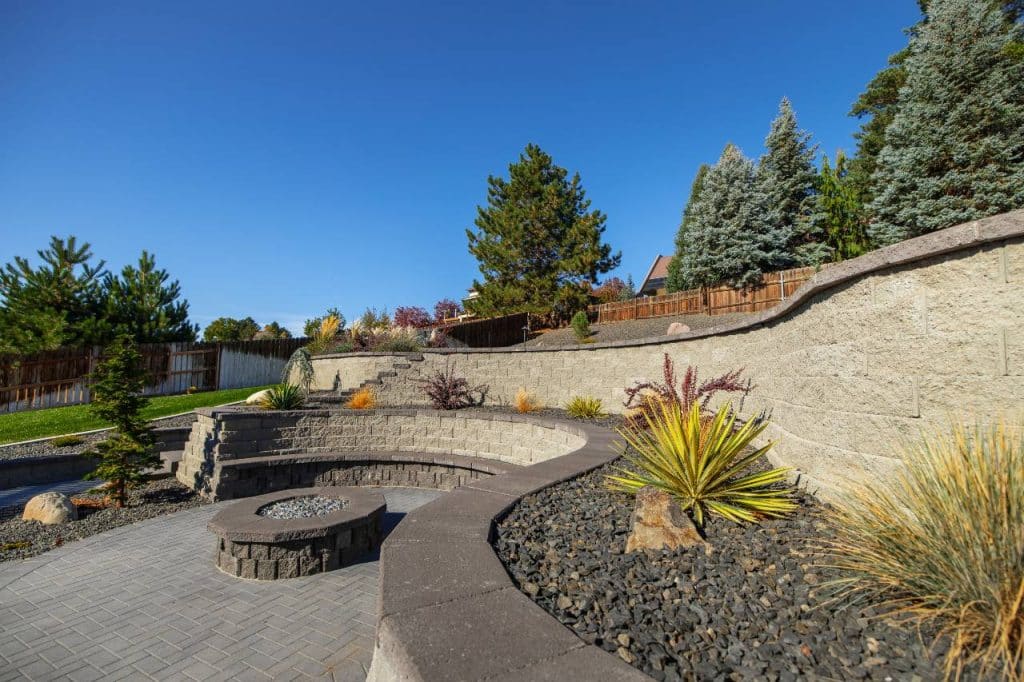
In residential and commercial landscapes, soil erosion often develops gradually. Several environmental and site-related factors influence how erosion forms and spreads across a property.
Sloped Terrain and Gravity
Sloped terrain is one of the most common contributors to erosion. When rainwater flows downhill without proper controls, it carries soil with it. Over time, this movement can create bare patches, uneven ground, and sediment buildup in unwanted areas.
Drainage and Water Flow Issues
Drainage problems also play a major role in erosion. Poorly directed runoff from roofs, driveways, or hardscapes concentrates water flow, increasing the speed and force that strips soil away. Areas where water repeatedly collects, or channels, are especially vulnerable.
Soil Composition and Stability
Soil composition affects how erosion develops. Sandy soils drain quickly but shift easily, while clay-heavy soils retain water and can become unstable when saturated. These characteristics influence how landscapes respond to rainfall and seasonal moisture changes.
Long-Term Risks of Unmanaged Erosion
Unmanaged erosion can create long-term risks, including damage to foundations, walkways, patios, and underground utilities. According to the Federal Emergency Management Agency, improper drainage and uncontrolled runoff are common contributors to foundation damage and moisture intrusion around structures. Addressing erosion early helps protect both the landscape and the built environment.
How Retaining Walls Prevent Soil Erosion
Retaining walls are a proven solution for controlling erosion on sloped or uneven properties. Their primary function is to hold back soil and reduce the forces that cause soil to shift and wash out.
By creating stable transitions between elevation changes, retaining walls interrupt downhill water flow. This slows runoff and allows water to be redirected through controlled drainage systems rather than cutting through soil. Many retaining walls incorporate gravel backfill and drainage piping that relieve pressure and prevent water buildup behind the wall.
Stabilizing soil also protects nearby structures. Retaining walls help safeguard foundations, patios, sidewalks, and hardscapes from soil movement that can lead to cracking or settling. In landscaping construction, these walls serve as both a protective barrier and a structural anchor.
When designed correctly, retaining walls reduce maintenance needs and help landscapes hold their intended shape year after year.
Retaining Walls as a Landscaping Design Feature
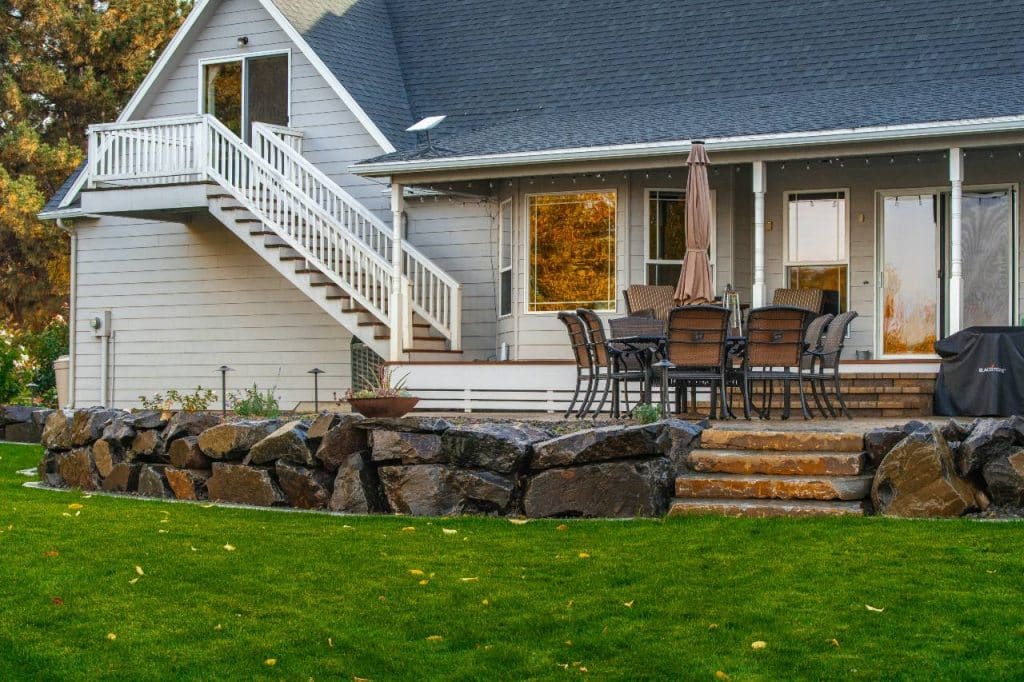
Beyond erosion control, retaining walls play an important role in landscaping design. They allow property owners to transform challenging terrain into functional, visually appealing outdoor spaces.
Creating Usable Outdoor Areas
One of the most valuable benefits of retaining walls is the creation of usable, level areas. They can carve out flat sections for patios, seating areas, lawns, or garden beds where sloped ground once limited usability.
Defining Spaces and Adding Visual Structure
Retaining walls also help define outdoor spaces. They can frame planting areas, separate functional zones, and create natural transitions between different parts of the landscape. Tiered wall designs add depth and visual rhythm, especially on properties with significant elevation changes.
Enhancing Aesthetics Through Materials and Design
Material selection further enhances visual appeal. Stone, concrete block, and segmental systems offer a range of textures and colors that complement surrounding plantings and architectural styles. When integrated thoughtfully, retaining walls support a cohesive landscaping design rather than standing out as purely structural elements.
Retaining Walls in Landscaping Construction
Proper landscaping construction is critical to the performance and longevity of retaining walls. These structures must withstand soil pressure, water forces, and seasonal changes.
Importance of Proper Base Preparation
Base preparation is one of the most critical steps in retaining wall construction. A compacted gravel foundation provides stability and helps evenly distribute weight. Without a properly prepared base, even well-built walls may shift or settle over time.
Drainage Considerations Behind Retaining Walls
Drainage considerations are equally important. Water buildup behind a retaining wall increases pressure and can lead to bowing or failure. Drainage systems such as perforated pipes, gravel backfill, and weep openings allow water to escape safely.
Wall Height, Load, and Reinforcement Factors
Wall height and load requirements determine whether reinforcement is needed. Taller walls often require geogrid reinforcement or engineered designs to handle increased soil pressure. Professional landscaping construction accounts for these factors to meet safety standards and site-specific conditions.
Working with professional landscape architects reduces the risk of premature failure and supports long-term landscape stability.
Residential vs Commercial Applications

Retaining walls serve different purposes depending on the property type, though the underlying principles of soil support and drainage remain the same.
Residential Applications
In residential settings, retaining walls are commonly used to:
- Manage backyard slopes and uneven terrain
- Create garden terraces and defined planting areas
- Support outdoor living spaces such as patios, walkways, and seating areas
Homeowners often prioritize aesthetics alongside functionality. Materials, finishes, and wall shapes are selected to complement the home and surrounding landscape while still addressing erosion and drainage concerns.
Commercial Applications
Commercial properties typically involve larger-scale retaining walls designed to:
- Support parking areas and building pads
- Stabilize access roads and drive lanes
- Manage elevation changes across expansive landscaped areas
While the basic function remains consistent, commercial retaining walls often require greater coordination due to load requirements and site regulations.
Maintenance and Longevity Considerations
While retaining walls are designed for durability, regular maintenance remains vital to long-term performance. Periodic inspections help identify early signs of stress before they develop into larger structural issues.
Common indicators of potential problems include:
- Bulging sections
- Visible cracking
- Leaning walls
- Standing water near the base
Drainage issues are often the earliest warning sign. Trapped water increases pressure behind the wall and can accelerate structural wear if left unaddressed. When retaining walls are built using proper construction methods and high-quality materials, landscaping maintenance is typically minimal.
When a Retaining Wall Makes Sense
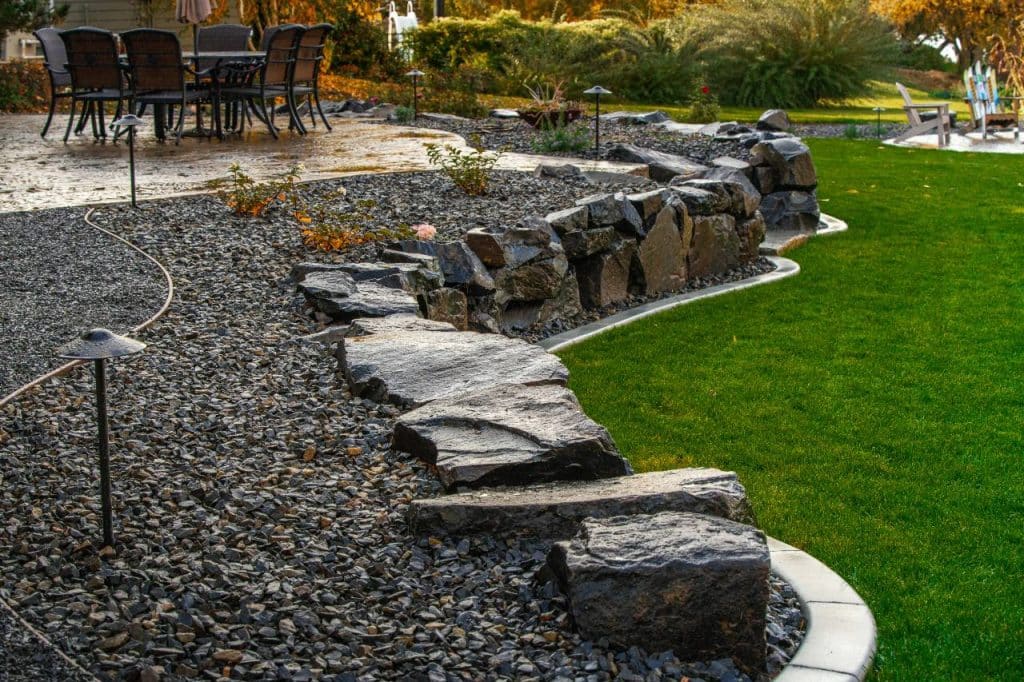
Certain site conditions strongly indicate the need for a retaining wall. Persistent soil erosion, steep slopes, and recurring drainage issues are common signs that structural support may be necessary.
Retaining walls are especially effective when erosion control can be combined with visual improvements. Rather than treating erosion as a standalone problem, many property owners incorporate retaining walls into broader landscaping design plans that improve usability and appearance.
Planning retaining walls as part of a larger landscape project allows for better coordination with grading, drainage, plantings, and hardscapes. This integrated approach supports both function and aesthetics from the start.
Closing Guidance
Soil erosion and drainage issues rarely resolve on their own, particularly on properties with sloped terrain and varied soil conditions common throughout Eastern Washington. Addressing them early helps protect your property while creating outdoor spaces that are more usable and visually balanced. Considering a retaining wall for your property? Schedule a site evaluation with Musser Landscaping to determine the right approach for your landscape.