The Tri-Cities has a way of flipping fast. One week you are still running the sprinklers through 90-degree afternoons, and the next the nights are dropping into the 30s, the wind is picking up off the Columbia, and the grass has gone quiet. Growth slows. The lawn starts to look tired. And most homeowners are left wondering: do I keep mowing? Should I fertilize now or wait? Can I just let it go until spring?
What you do in October matters more than most people realize. The care your lawn receives before it goes dormant directly shapes how it comes back in April. A well-prepared lawn rebounds faster, fills in more evenly, and carries less disease pressure into the new season. A neglected one spends the first weeks of spring recovering from problems that were preventable.
This checklist walks through the key fall lawn care tasks for Tri-Cities homeowners, in the order they matter, with honest guidance on timing and what to skip.
What Fall Dormancy Actually Means for Your Lawn
Brown grass is not dead grass. That is the most important thing to understand before you do anything else this fall.
According to WSU Extension, grass growth drastically slows down in October and then goes dormant as cold weather, frost, and shorter days arrive. The blades stop growing and lose their color, but the crowns, the growing points at the base of each grass plant, remain alive below the surface. The lawn is conserving energy, not dying.
This is where a lot of homeowners make a costly mistake. They see brown turf and assume something is wrong. They apply treatments the lawn cannot absorb, overwater trying to “revive” it, or panic and reseed areas that simply need time. Dormancy is normal. Unnecessary intervention during this window can do more harm than good.
The timing matters here. Penn State Extension notes that most cool-season turfgrasses produce their best root growth at soil temperatures between 50°F and 65°F. Roots can continue growing below 50°F, but growth slows dramatically as temperatures approach freezing. That window while the soil is still cool but not frozen is when fall lawn care tasks have the most impact. In the Tri-Cities, that window is real but short. Once the ground hardens, the opportunity closes.
Your Fall Lawn Care Checklist
1. Adjust Your Mowing Height and Time Your Final Cut
As growth slows, reduce your mowing frequency. Forcing a weekly schedule on a lawn that has nearly stopped growing adds unnecessary stress and compacts the soil around the crowns.
For the final mow of the season, bring the height down slightly from your summer setting, but do not scalp it. Cutting too short before dormancy exposes the crowns to cold and wind damage. Leaving the grass too long creates a mat that traps moisture and invites disease. A moderate final height protects the plant without smothering it.
2. Apply Fall Fertilizer at the Right Moment
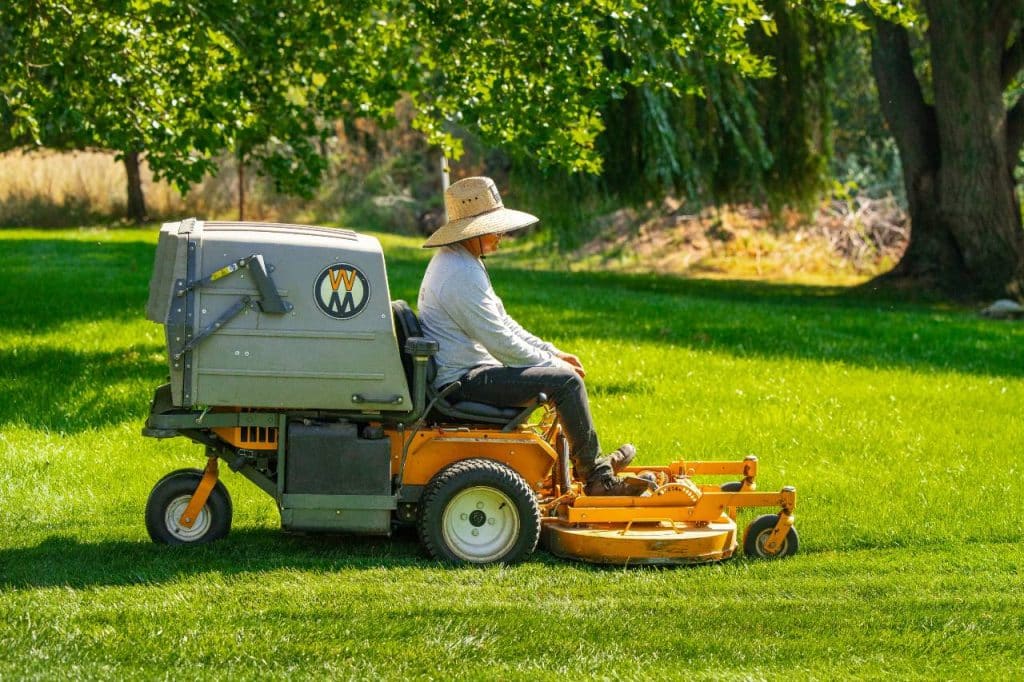
This is the highest-value task of the fall season, and timing is everything. WSU Extension recommends applying 1 lb of nitrogen per 1,000 square feet in the fall, and for Eastern Washington specifically, making that application after the last mowing and before the soil freezes.
That instruction is precise for a reason. Applied too early, the nitrogen pushes top growth when the plant should be directing energy downward. Applied after the soil freezes, it sits unused and can run off with snowmelt. The window between your last mow and the first hard freeze is the target. Musser Landscaping’s turf fertilizer application service is timed to this window, not to a calendar date that ignores what the ground is actually doing.
3. Winterize Your Irrigation System
Water left in your irrigation lines through a Tri-Cities freeze does not stay put. It expands, and that expansion splits pipes, cracks valves, and breaks fittings in places you will not find until you turn the system on in spring. By then, the damage is done and the repair bill is waiting.
Blowing out the lines and shutting off exterior valves before temperatures drop is the single most cost-efficient thing you can do for your irrigation system each fall. Musser’s sprinkler blowout service handles this as part of our full-service landscaping maintenance plan, so nothing gets missed.
4. Think Carefully Before You Aerate
Aeration is not automatically a fall task. WSU Extension notes that aeration can be done at almost any time of year, and that hollow-tined aeration is primarily used to reduce soil compaction. Whether fall is the right window for your lawn depends on your turf type, how compacted the soil actually is, and what the lawn has been through over the summer.
If your lawn saw heavy foot traffic, had standing water issues, or feels dense and slow to absorb water, fall aeration may be worth scheduling before dormancy sets in. If the lawn is in reasonable shape, it may not be necessary this year at all. A professional assessment gives you a real answer rather than a default one.
5. Clear Leaves and Debris Before They Cause Problems
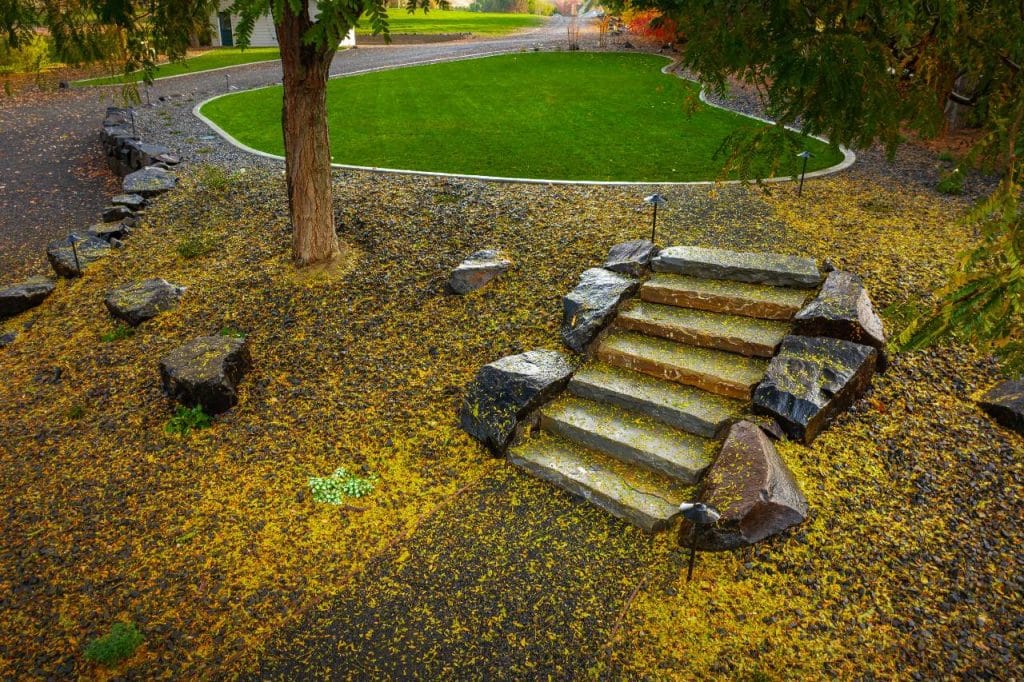
A layer of fallen leaves looks harmless, but it traps moisture against the turf as temperatures fluctuate. That moisture, combined with the warmth held beneath the mat, creates exactly the conditions where lawn disease takes hold. Once the snow melts in spring, the damage underneath is already done.
Clearing leaves and organic debris before dormancy is part of Musser’s fall cleanup service. It is a straightforward task that carries real consequences when it gets skipped.
6. Keep Traffic Off Wet and Frozen Turf
Foot traffic on saturated or frozen ground compresses the soil and crushes the grass crowns. The damage is not always visible immediately, but it shows up in spring as thin, patchy areas that are slow to recover. Keep foot traffic to a minimum on wet turf, and keep vehicles and heavy equipment off the lawn entirely once the ground starts to freeze.
What Not to Do This Fall
A few common mistakes are worth naming directly.
Do not cut off irrigation abruptly before the lawn has hardened off. The turf needs consistent moisture through the transition into dormancy. Shutting the system down too early stresses the roots at the moment they are trying to store energy for winter.
Do not scalp the lawn on the final mow. It feels like a clean finish, but it leaves the crowns exposed and vulnerable.
Do not apply treatments once the lawn is fully dormant. Fertilizer, herbicide, and other products applied to a dormant lawn cannot be taken up by the plant. They sit on the surface, run off, and accomplish nothing except wasting your time and money.
Do not leave standing water near turf or hardscapes. Water that pools and refreezes repeatedly causes soil compaction, heaves pavers, and stresses plant roots. Address drainage issues before the freeze cycle begins.
Why Timing and Local Knowledge Make the Difference
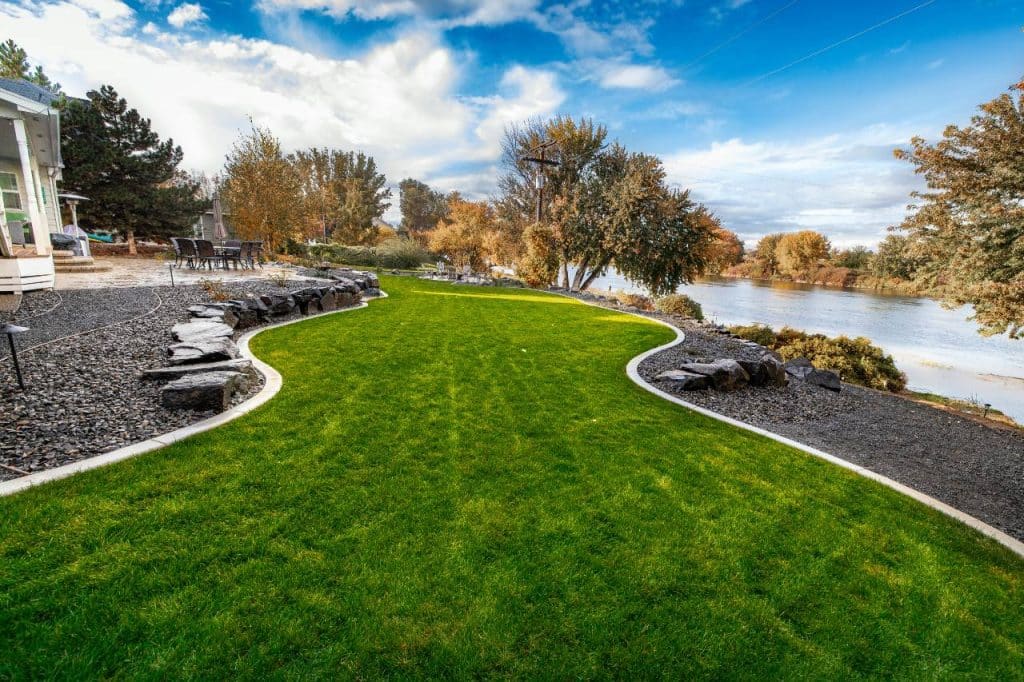
Fall lawn care in the Tri-Cities is not a labor problem. Most of these tasks are straightforward. It is a timing and judgment problem. The fertilization window, the blowout schedule, the call on whether to aerate, all of it depends on reading what the lawn and the soil are actually doing, not following a generic checklist written for a different climate.
Eastern Washington’s semi-arid conditions, the wind, the dry soil, and the abrupt temperature swings mean that what works in western Washington or the Midwest does not always translate here. Our in-house crews work in this climate year-round. We know what Tri-Cities turf needs and when it needs it. Our customized maintenance plans cover fall cleanup, turf fertilizer applications, and irrigation blowout as a coordinated package, not as separate services you have to schedule and track yourself.
The Work You Do Now Pays Off in April
A lawn that goes into winter well-prepared comes back faster, fills in more evenly, and needs less intervention in spring. The fall window is short, and the tasks that matter most, fertilization, irrigation blowout, debris removal, all have a closing date.
If you want a professional assessment of what your property needs before the ground freezes, we are ready to help. Call Musser Landscaping at (509) 440-1942 or fill out the contact form to schedule your fall maintenance visit or get a customized quote.