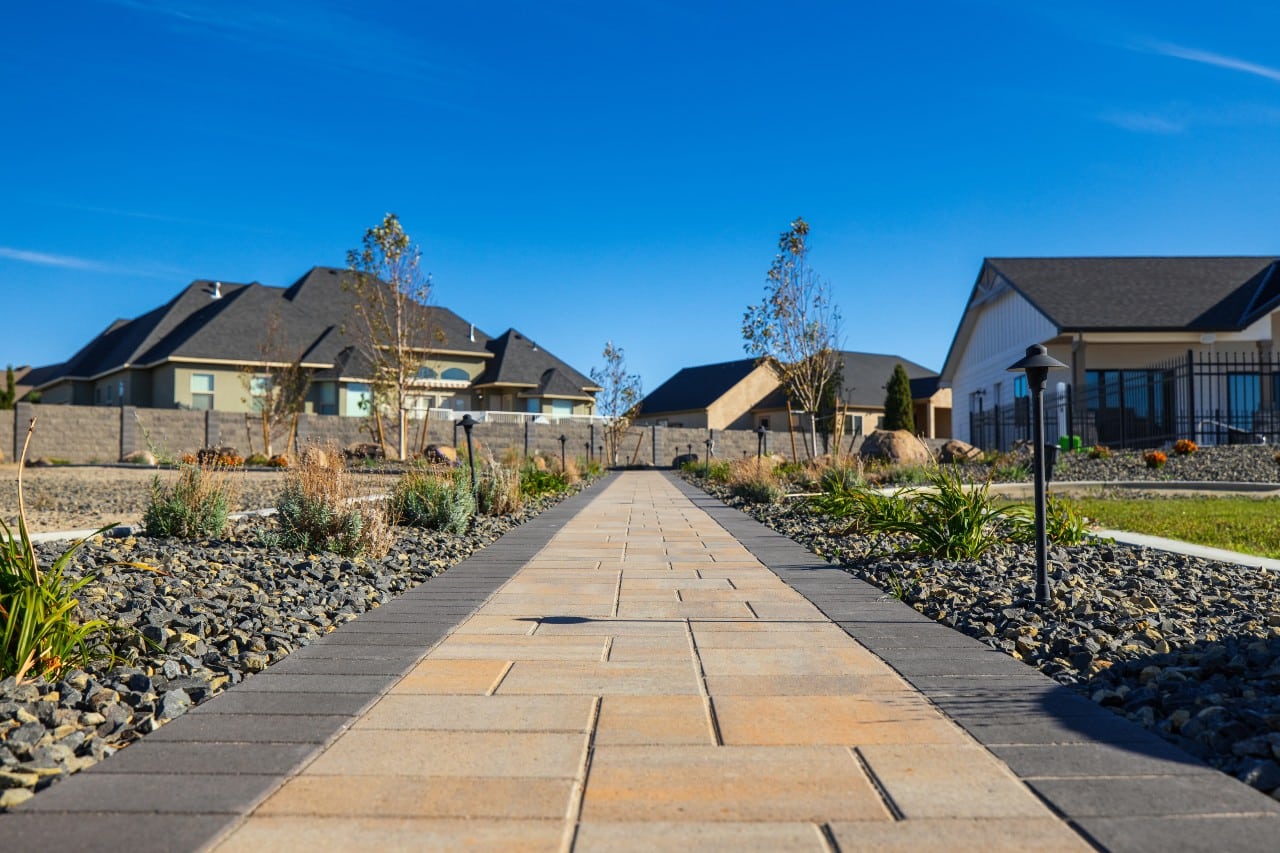
You’re hosting a gathering, and guests are picking their way across uneven stepping stones to reach your front door. It’s the first impression your house makes, and it’s the wrong one. A professionally designed paver patio or pathway changes that before anyone even knocks.
According to a HomeLight survey, pavers deliver a 109% return on investment, adding approximately $3,563 in home value on a $3,269 patio investment. For homeowners in the Tri-Cities looking to take on a patio project, few upgrades offer that kind of return with that level of visual impact.
The difference between a paver patio that lasts and one that shifts, cracks, or drains poorly comes down to design, choices of brick, concrete, and paver patio materials, and how it’s set. Getting all three right is what separates a weekend project from a professional patio job.
In this post:
- Why paver patios and pathways are worth the investment
- How to choose the right options for your space
- What the professional patio process looks like, step by step
- How Musser Landscaping delivers patio projects built to last
Why Paver Pathways Are Worth the Investment

Benefits That Go Beyond Looks
Pavers outperform poured slabs and asphalt in nearly every practical category. They handle freeze-thaw cycles better and drain more effectively. When a single unit cracks or shifts, it can be replaced without disturbing the surrounding patio area.
Unlike poured surfaces, pavers don’t fade, crack across large sections, or require full replacement when damage occurs. A well-designed paver patio handles the Tri-Cities climate better than poured alternatives at any price point.
Pavers come in a wide range of colors and shapes, allowing them to be closely tailored to complement any house’s architecture and existing landscaping.
Return on Investment and Property Value
A well-laid paver patio does more than boost daily use. It signals quality and attention to detail to potential buyers. According to the National Association of Realtors, an overall landscape upgrade will recoup up to 100% of its value, with paver walkways and driveways among the top features that elevate curb appeal.
For homeowners who love their outdoor living space and want to protect their property, hiring professional landscaping crews is one of the smartest investments in paver patios. The price difference between DIY and professional work pays for itself in longevity and resale value.
Choosing the Right Paver Options
The brick, stone, or paver material you choose affects how your patio looks and what price point you’re working with. Each option brings a different balance of durability, style, and price point for your paver patio project.
Paver Material Selection Guide
| Material | Characteristics | Best For |
| Concrete Pavers | Affordable, versatile, and a wide range of colors and shapes | Most patio and pathway applications, modern and traditional styles |
| Natural Stone | Premium look, unique variation, extremely durable | High-end designs, accent pathways, statement entries |
| Brick Pavers | Classic appearance, long lifespan, slip-resistant | Traditional homes, garden pathways, border accents |
| Permeable Pavers | Allows water drainage through joints, eco-friendly | Areas with drainage concerns, sloped or high-runoff sites |
Designing Your Paver Patio or Pathway
Good paver patio design balances aesthetics with practical function. Layout, proportion, and the right colors all work together to produce a finished patio that feels intentional and lasts for years.
Layout, Traffic Flow, and Accessibility
A well-designed patio or pathway follows how people actually move through a space, with a width typically 48 inches or wider for primary entry paths and narrower for a backyard patio or secondary garden path. Gentle grades and thoughtful landscaping design make the patio accessible to everyone.
Color, Pattern, and Visual Interest
Patterns like herringbone and basketweave each produce a different visual effect and level of structural strength underfoot. Borders in contrasting colors or brick add definition and frame the patio area cleanly.
Curves soften rigid lines, producing a more natural feel throughout the landscape. Additionally, mixing colors and materials adds depth and visual interest that a single-material patio simply can’t match.
Integration with Existing Landscaping
The strongest paver patio designs feel like they were always part of the yard. Brick pavers and stone choices should complement the house exterior, and patio edges should transition naturally into planting beds or hardscape features.
A landscaping pro who understands both hardscape and softscape brings that cohesion to the finished backyard patio or front entry path.
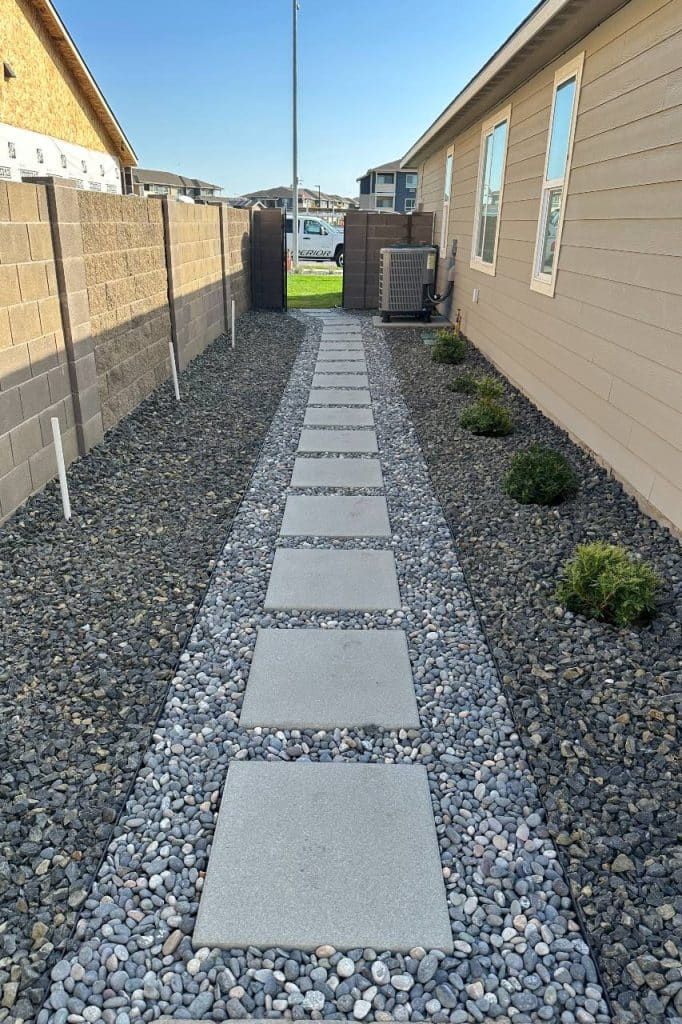
The Professional Installation Process
Proper installation determines whether a paver patio will hold up for decades or start shifting within a few seasons. Every step in the paver patio process builds on the one before it, and skipping any one of them is where DIY patio projects most often go wrong.
1. Site Preparation and Excavation
The crew marks the patio layout and digs down to the appropriate depth, typically six to eight inches, depending on soil conditions and expected traffic load. This site prep work removes organic material that would otherwise compress and cause settling over time.
2. Base Layer and Grading
A compacted gravel foundation layer is placed and graded to direct water away from structures and prevent pooling. Landscape fabric is often laid beneath the gravel to prevent weed growth and improve drainage. Without a solid sub-base foundation, even the best pavers will shift and sink.
3. Edge Restraints and Sand Bedding
Edge restraints are secured along the perimeter to keep pavers from spreading outward under foot traffic. A layer of coarse sand is then screeded across the patio area to produce a smooth, level surface for setting pavers in the right directions.
4. Paver Placement and Joint Sand
Pavers are set by hand in the chosen pattern, tapped into place with a rubber mallet, and cut to fit edges and curves with precision. Polymeric sand is swept into the seams and tamped down to lock the patio surface together. The result is a stable, interlocked paver patio built to handle years of use.
Common DIY Mistakes and Why They Matter
The most common DIY paver patio failure starts below the surface. Inadequate depth, uncompacted gravel, or poor grading leads to settling, pooling water, and pavers that rock underfoot within a season or two. By the time the problem is visible on the patio, the only fix is a full redo.
Without proper edging, pavers migrate outward, and gaps open between units. Without polymeric sand filled into the seams, the patio surface loses stability, and individual pavers begin to shift under load. Professional landscaping crews get these details right on every paver patio project.
Maintenance, Longevity, and What the Pros Get Right
Paver patios are one of the lowest-maintenance outdoor surfaces available. Occasional sand replenishment, spring cleaning, and spot repairs are all it typically takes to keep a professionally laid backyard patio or front entry pathway looking sharp for decades.
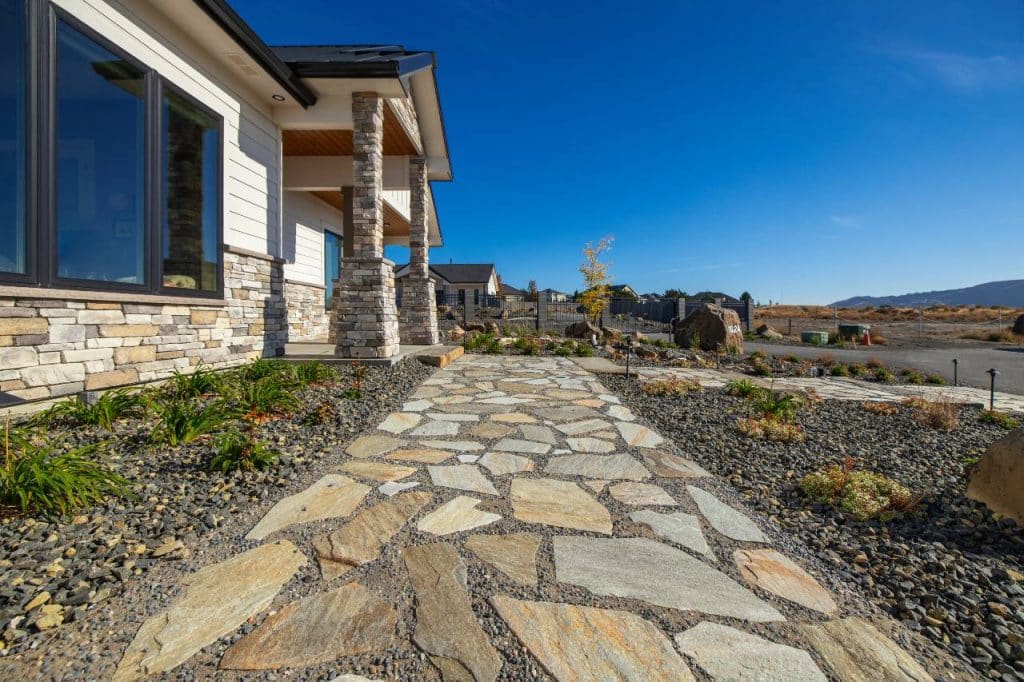
The keyword is professionally laid.
Proper foundation preparation, accurate grading, and a solid foundation layer are what allow pavers to perform long-term without chronic settling or drainage issues. Natural stone lasts up to 100 years, and even properly set brick pavers last for decades.
The longevity that a professional landscaper delivers for your patio project:
- Expert brick paver and stone selection matched to your home’s style, climate, and price range
- Precise digging, grading, and foundation work that prevents settling and drainage issues
- Thoughtful landscaping design that integrates your paver patio with existing outdoor features
- A finished backyard patio or pathway built to last, backed by craftsmanship and attention to detail
The strength of any paver patio comes down to the team that lays it.
A Pathway Worth Taking
A paver patio or pathways are the outdoor improvements that pay you back every day. It elevates how your home looks, how it functions, and its value on the market. The right design and brick or stone paver choices make the difference between a patio you tolerate and one you genuinely love.
Musser Landscaping brings design expertise and installation precision to every patio project in the Tri-Cities. Our experienced landscaping team works with you from brick and stone selection through final installation to deliver a finished paver patio that performs as well as it looks.
Ready to Transform Your Outdoor Space with Beautiful, Lasting Pathways? Contact Musser Landscaping today for a free consultation and discover how our expert landscaper contractors bring your paver pathway vision to life with professional landscaping design and installation that stands the test of time.