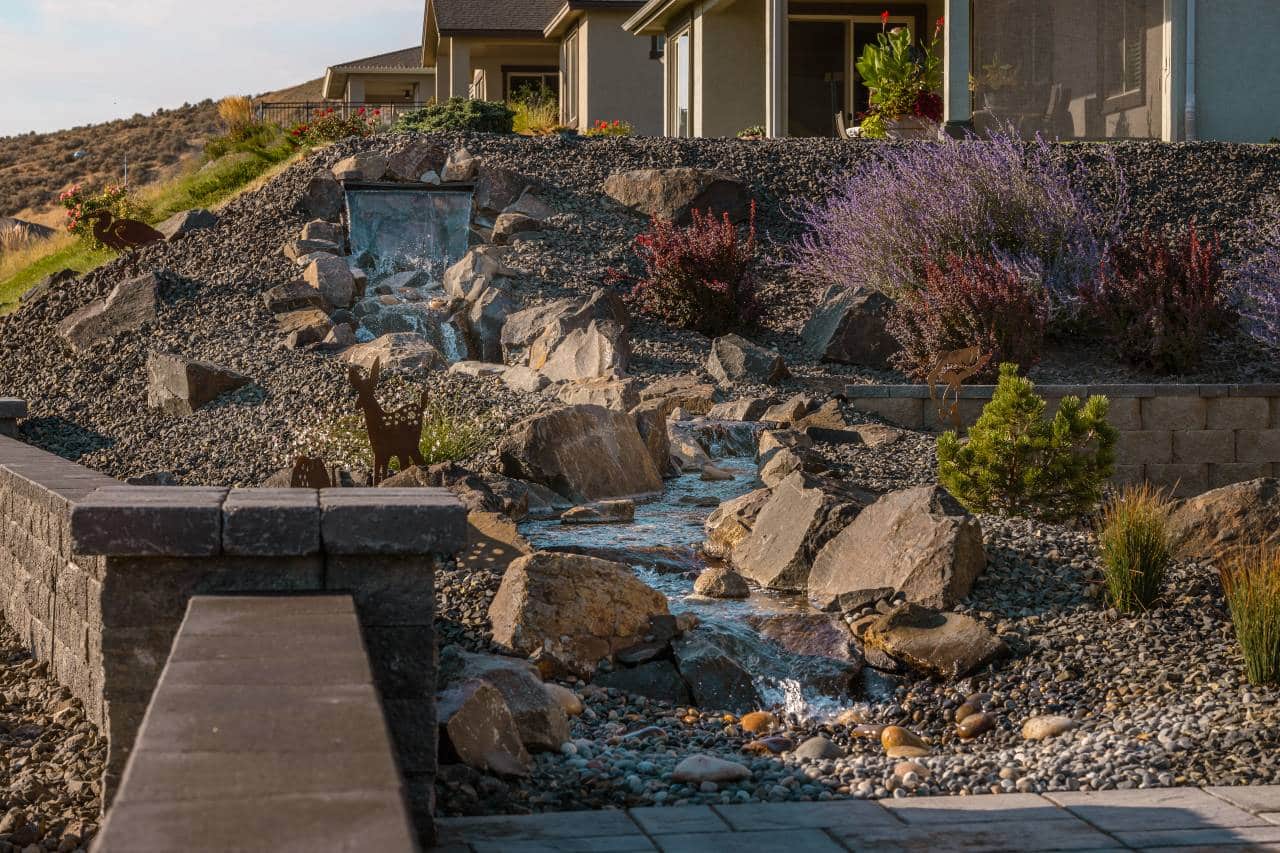
You step out onto the patio after a long day. The yard is quiet, the kids are inside, and the only thing missing is something that draws you to actually sit out there. A water feature changes that. The sound of moving water turns an ordinary backyard into a place you want to be.
According to NALP’s 2026 landscape trends report, homeowners are focusing on features that deliver long-term value. Water features add daily enjoyment, increase property value, and serve as focal points in landscape design.
The right water feature does more than look beautiful. It becomes the reason you spend your evenings outside instead of inside.
In this post, you’ll learn:
- The most popular types of water features for residential yards
- Water feature ideas and tips for integrating into existing landscape design
- Planning considerations from size and location to budget and maintenance
- Why professional residential landscaping services matter for water feature installation
Why Water Features Are Central to Modern Landscape Design

Water features have moved from luxury extras to a staple of landscape design. The sound, the movement, and the focal point they create change how a yard feels. Modern homeowners want outdoor spaces that work as personal retreats.
According to a 2025 Market Report Analytics analysis, residential applications represent 65 percent of the outdoor garden water feature market. The growth reflects what designers see on every project: homeowners want water in the yard.
How Water Features Transform an Outdoor Space
A water feature reshapes an outdoor space without overhauling the entire landscape. A small fountain on a patio, a pondless waterfall along a walkway, or a koi pond at the edge of the garden each creates a focal point. Even a corner of the backyard becomes a destination.
The visual impact is just one part. Movement, reflection, and sound all add depth to outdoor spaces that otherwise feel static. A photo of the same yard before and after the install shows the difference instantly.
The Sensory Benefits of Flowing Water in a Yard
Flowing water engages every sense at once. The sound masks traffic noise and neighbors’ conversations, creating a calm garden environment even in busy neighborhoods. The movement attracts birds and other wildlife, which adds another layer of life to the yard.
Research consistently links the sound of running water to lower stress, reduced blood pressure, and a sense of serenity. The benefits are not theoretical. They show up every time someone sits next to the feature.
Types of Water Features for Residential Landscaping
The right water feature depends on the yard, the budget, and the look the homeowner wants. The most popular types of water features for residential landscaping:
- Fountains: standalone, wall-mounted, or tiered fountains in classic or modern styles, ideal for patios, garden beds, and smaller spaces
- Backyard ponds and koi ponds: larger features that support aquatic plants and fish, anchored by boulders and surrounding garden plantings
- Waterfalls and cascades: vertical features that add height, sound, and movement, often combined with a pond, pool, or basin
- Streams and pondless waterfalls: flowing water without standing water, lower maintenance and family-friendly for kids and pets
- Bird baths and smaller accent features: compact options that attract wildlife and add charm to a garden or open area
- Bubblers and disappearing fountains: child-safe and pet-safe water features with water that recirculates into a hidden basin
- Reflecting pools and modern pools: clean-lined modern pools that double as visual mirrors of the surrounding garden and architecture
Each type brings something different to the yard. The best choice matches the size of the space, the style of the home, and how the homeowner plans to use the area.
Planning a Water Features Landscape Design That Fits Your Yard
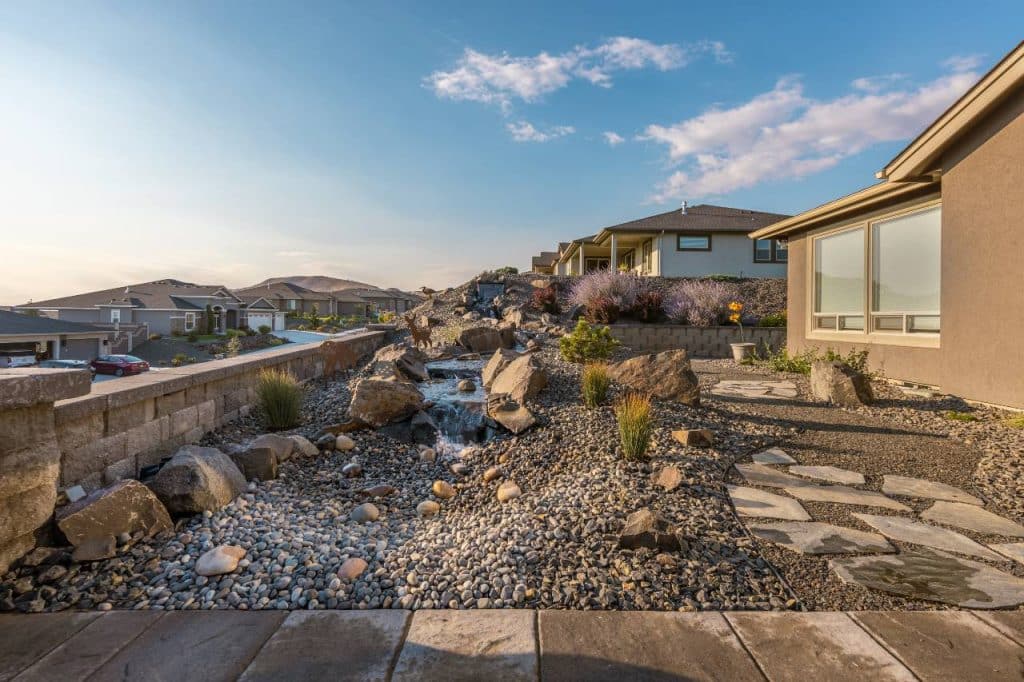
A water feature is a long-term investment, and the planning matters as much as the install. Size, location, sunlight, electrical access, and budget all shape what ends up in the garden.
Size, Location, and Sunlight Considerations
The size of the yard sets the scale. A small fountain works on a 200-square-foot patio, while a backyard pond or a multi-tier waterfall needs more room around it. Forcing a feature that’s too large into a small yard makes the space feel crowded.
Sunlight matters too. Aquatic plants need direct sun, while ponds with fish often do better in partial shade to limit algae growth. Walking the site and mapping the sun across the day before placing a feature saves problems later.
Budget, Electrical Needs, and Long-Term Investment
Most water features need power for the pump, lighting, and filtration. The location has to be reasonably close to an electrical source, or the project needs to budget for running new lines. Underground electrical work adds cost and complexity.
The budget covers both the initial installation and ongoing maintenance. A simple bubbler may cost a few hundred dollars, while a customized pond with a waterfall and lighting runs into the tens of thousands. The investment pays back in years of enjoyment, beauty, and added property value.
Design Integration With Existing Landscape Design
A water feature should look like it belongs, not like it was dropped in last week. Strong integration with the existing landscape design comes from thoughtful choices about style, materials, and surroundings.
Complementing Architectural Style and Surrounding Plantings
The water feature should match the architectural style of the home. A classic stone fountain fits a traditional house. A sleek wall-mounted feature complements modern architecture with quiet elegance. Mismatched styles fight each other and pull focus from both.
Surrounding plantings carry equal weight. Moisture-loving plants, bamboo, and ornamental grasses soften the edges and create a natural transition from feature to garden. Boulders, walkways, and other hardscaping anchor the feature in the broader yard.
Lighting and Hardscaping for Nighttime Ambiance
Lighting transforms a water feature after sunset. Underwater LEDs illuminate fountains and pools, while uplighting on surrounding plants and boulders adds depth and shadow. The right lighting enhances the feature’s beauty and extends its functionality well into evening hours.
Hardscaping ties everything together. Walkways, retaining walls, patios, and seating areas around the feature create cohesive outdoor spaces that feel intentional rather than scattered. An example of strong design integration includes a fountain centered between a patio and a garden path.
Maintenance Considerations for Different Water Features
Maintenance is the part of water feature ownership that most homeowners underestimate. Each type comes with its own care schedule, and matching the right feature to the right level of upkeep saves headaches later.
Feature Type Care and Maintenance
| Feature Type | Routine Maintenance | Seasonal Needs |
| Fountains | Clean weekly, refill regularly, check pump monthly | Drain and store small fountains in winter |
| Backyard pond with fish | Weekly water quality checks, filter cleaning, and feeding | Winterize equipment, monitor ice |
| Waterfalls and cascades | Inspect the pump, clear debris, and check water flow | Service the pump before and after the freeze |
| Pondless waterfalls | Clean reservoir, check pump, low routine effort | Drain or insulate the basin in freezing climates |
| Bird baths and bubblers | Rinse and refill weekly, scrub monthly | Bring indoors or cover in winter |
| Streams and natural water features | Clear debris, monitor liner, and manage plants | Adjust flow seasonally, protect during freeze |
| Modern pools and reflecting pools | Skim debris, check filtration, brush surfaces | Cover and winterize |
Professional service handles technical work such as pump replacement, water quality testing, and full system winterization. DIY upkeep covers daily tasks like refills, debris clearing, and basic cleaning. Most homeowners settle on a hybrid approach.
Maximizing Enjoyment of Your Outdoor Space
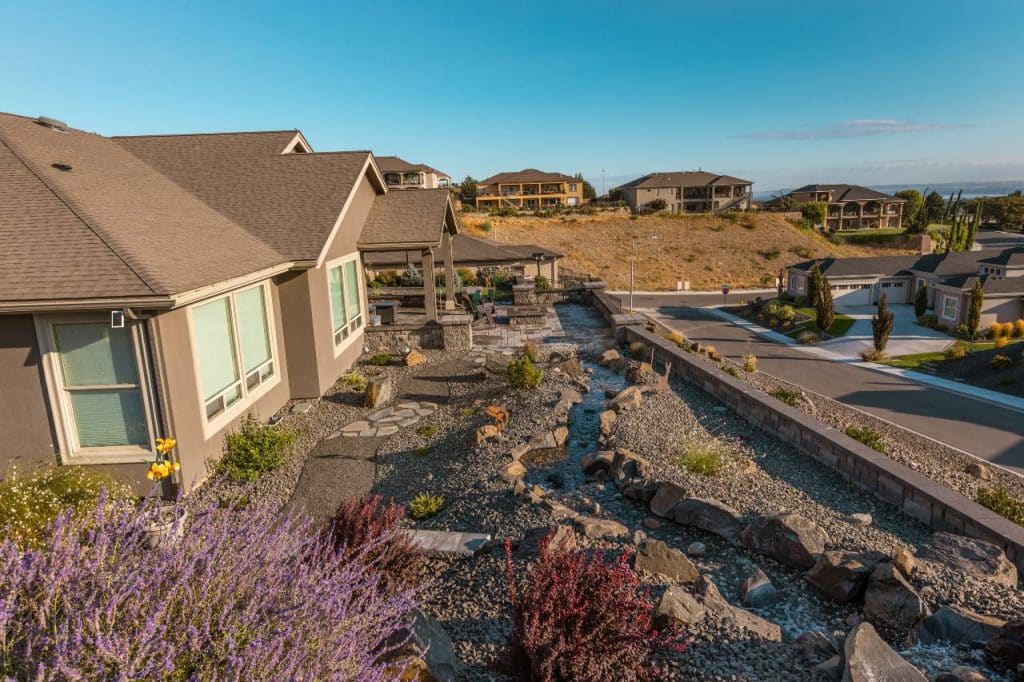
A water feature only delivers its full value when it is positioned and framed for daily enjoyment. Placement, surrounding seating, and sensory layers all shape how often the feature actually gets used.
Positioning for Best Visibility and Sound
The best water feature placement balances visibility from inside the home and presence from the seating areas outside. A fountain near a back patio carries sound to the deck. A pond at the edge of the lawn draws people across the yard.
Sound travels differently across an open area. Tall plantings, walls, and fencing will amplify or dampen sound depending on their placement.
Multi-Sensory Landscape Design Experiences Year-Round
A water feature works alongside the rest of the landscape design to create a multi-sensory experience. Fragrant plants, textured boulders, and the play of light across water all engage different senses. Smart design tips include layering scent, texture, and sound throughout the garden.
Year-round appeal matters too. Evergreen plantings around the feature, lighting for night use, and the muted reflection of winter sun keep the feature beautiful in every season.
Bird Bath and Smaller Accent Water Feature Ideas
A bird bath or smaller accent water feature delivers serious impact without the cost or commitment of a full pond. The right placement and creative pairing turn a modest investment into a focal point that draws wildlife and adds charm to even the smallest yards.
Smart water feature ideas include tucking a bird bath into a perennial bed for color contrast. It might be pairing a small bubbler fountain with moisture-loving plants, or anchoring a corner patio with a tabletop fountain.
For homeowners who prefer a quieter touch, a single bird bath in the garden brings birds and beauty to even the smallest backyard.
Why Professional Residential Landscaping Services Matter for Water Features

Water features look effortless when they are done right. The work behind that ease encompasses electrical, plumbing, and hydraulic systems. It’s also important to have an experienced design eye for integrating the feature with the surrounding landscape.
What an experienced landscape design team brings to a water feature project:
- Customized design matching the architectural style of the home and existing landscape
- Proper sizing and placement based on the yard’s dimensions, sun exposure, and grading
- Electrical and plumbing work handled to code with reliable pump and filtration systems
- Quality materials and construction built for long-term durability and beauty through every season
- Integration of fountains, ponds, and pools with surrounding plants, hardscaping, walkways, and lighting
- Ongoing maintenance support that keeps the feature looking and sounding its best year after year
The right professional team turns a beautiful idea into a feature that performs as well as it looks.
Bring the Calm of Water to Your Outdoor Space
A water feature changes the way a yard is used. It becomes the reason to step outside in the morning with coffee or the backdrop for a quiet evening on the patio. It becomes the centerpiece that turns a backyard into a place that feels like a retreat.
At Musser Landscaping, we bring customized water-feature expertise to every residential landscaping project. Our experienced team handles the full process from concept through installation, lighting, and ongoing maintenance.
Contact us today to explore water feature ideas for your property. The calm of moving water is closer than you think, and the right team makes the difference between a feature you enjoy and one you actually live around.